Sand & Gravel
Insurance Built Around the Truck, Load & Operation
What Insurance Does a Dirt, Sand & Gravel Hauling Business Need?
A dump truck may spend part of the day on public roads and part of the day entering quarries, construction sites, yards, paving projects, landscaping locations, or other properties. The insurance program should address both the road exposure and the business activity connected to loading, transporting, and dumping bulk materials.

Liability on the Road
Commercial Auto Liability
May help pay qualifying damages when a covered dump truck or driver is legally responsible for bodily injury or property damage caused in an automobile accident.
Damage to Your Equipment
Truck & Trailer Physical Damage
Collision and comprehensive coverage may help repair or replace qualifying insured dump trucks, tractors, dump bodies, and scheduled trailers after a covered loss.
Customer-Owned Materials
Motor Truck Cargo
May help protect qualifying materials being transported for someone else when the hauling business is responsible for the customer’s property, subject to the cargo policy’s terms and exclusions.
Employees Behind the Operation
Workers’ Compensation
May provide qualifying benefits for drivers, dispatchers, mechanics, yard employees, loaders, and other workers who experience covered work-related injuries or occupational illnesses.
WHAT YOU HAUL MATTERS
Common Dirt, Sand, Gravel & Bulk Material Operations
Different materials can affect cargo exposure, cleanup risk, vehicle weight, loading methods, routes, contracts, and insurance-company eligibility.
Sand
Washed sand, concrete sand, fill sand, masonry sand, bedding sand, and other qualifying bulk sand products.
Gravel
Washed gravel, crushed gravel, road base, aggregate, pea gravel, and other construction or landscape materials.
Dirt & Soil
Fill dirt, topsoil, excavated soil, clean fill, grading material, and similar nonhazardous loads.
Rock & Stone
Crushed rock, quarry material, riprap, decorative stone, landscape rock, and other qualifying bulk stone.
Asphalt & Road Material
Hot mix, cold mix, recycled asphalt, base material, paving products, and road-building materials.
Nonhazardous Construction Debris
Concrete, asphalt, masonry, dirt, and other qualifying debris may create different cargo, liability, disposal, and cleanup considerations.
Different Equipment Creates Different Exposures
Dump Trucks & Trailers Used for Bulk Material Hauling
The truck configuration, gross weight, dump mechanism, trailer type, value, radius, and materials hauled should all be accurately reflected in the policy.
Protect More Than the Vehicle
Additional Coverage a Dump Truck Business May Need
General Liability
May help with qualifying non-auto bodily injury or property damage arising from premises, yards, loading areas, business operations, or other covered exposures.
Trailer Interchange / Non-Owned Trailer
Businesses pulling trailers they do not own may need specific coverage depending on contractual responsibility and the commercial auto policy structure.
Hired & Non-Owned Auto
May be relevant when the business rents, hires, borrows, or uses qualifying vehicles it does not own.
Pollution / Cleanup
Certain spills, releases, debris, cleanup costs, or environmental claims may require an endorsement or separate specialized coverage depending on the material and event.
Business Property & Equipment
Tools, office property, yard equipment, service vehicles, maintenance equipment, and other qualifying business property may need separate protection.
Umbrella or Excess Liability
May provide additional liability limits above qualifying underlying policies when the operation, contracts, customers, or potential claim severity justify higher limits.
EVERY LOAD CHANGES THE EXPOSURE
The Same Dump Truck Can Face Different Risks From One Job to the Next
Material type, weight, route, customer, trailer, loading location, unloading surface, and job requirements can all affect the exposure behind the same truck.
The Risk Continues After the Truck Leaves the Road
Why Dump Truck Insurance Requires More Than Standard Commercial Auto
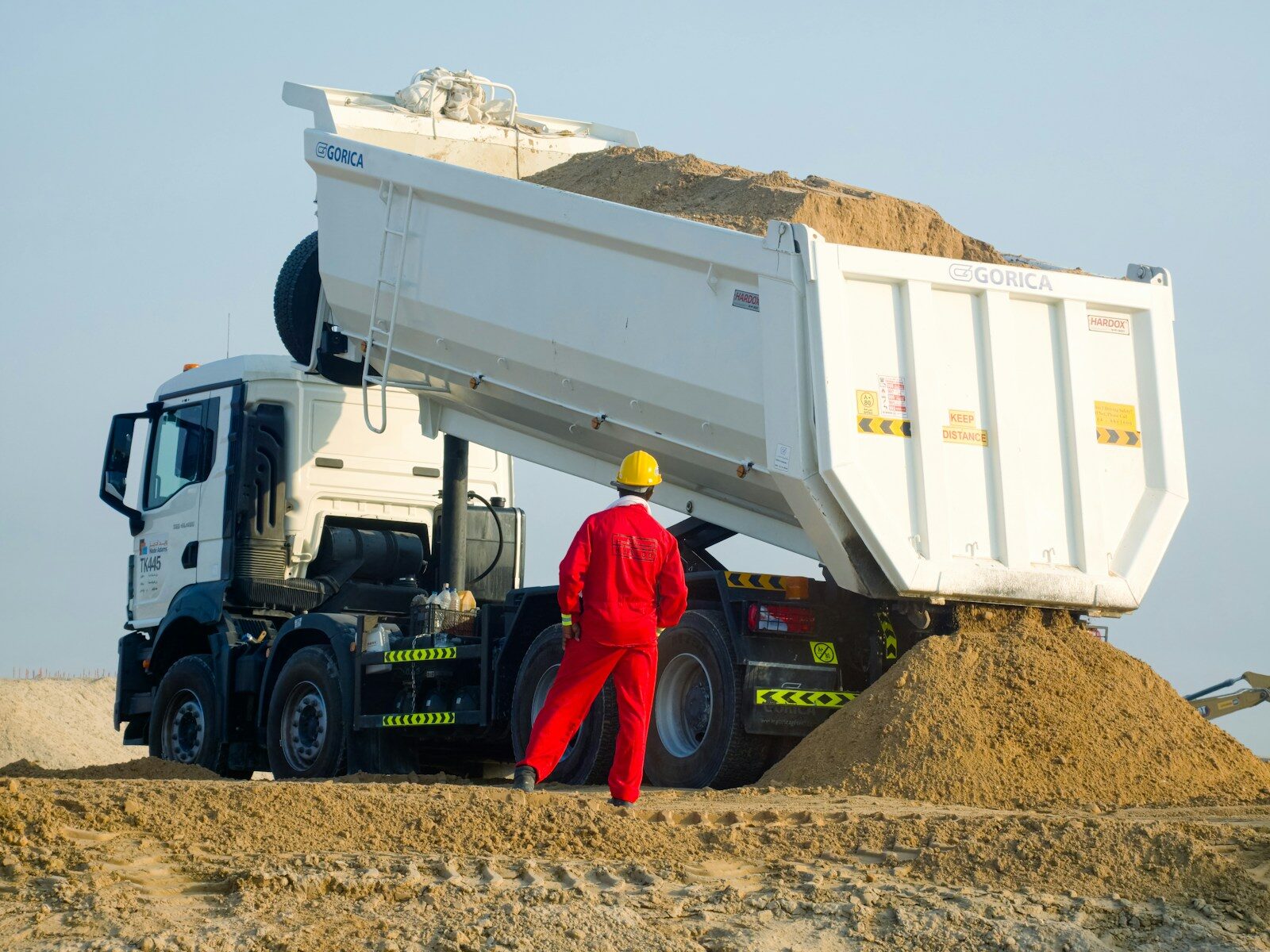
Dump trucks regularly enter uneven jobsites, carry shifting loads, operate at higher gross weights, raise hydraulic beds, back into tight locations, and work around employees, equipment, structures, and customers. These characteristics can create losses that look very different from ordinary business driving.
Common Dump Truck Loss Scenarios
What Can Go Wrong While Hauling or Dumping?
Truck Rolls Over While Dumping
Uneven ground, shifting material, improper positioning, wind, soft soil, or other conditions contribute to a rollover while the dump body is raised.
Load Spills Onto the Road
Sand, gravel, dirt, rock, or debris leaves the truck and creates property damage, cleanup expenses, traffic hazards, or additional accidents.
Raised Bed Strikes an Object
A raised dump body contacts a power line, structure, overhead equipment, tree, bridge, loading system, or other property.
Driver Backs Into Equipment
A truck backing into a jobsite or yard damages equipment, another vehicle, fencing, a building, or other property.
Trailer Is Damaged
A dump trailer, pup trailer, or transfer unit is damaged in a collision, rollover, theft, vandalism, or another qualifying covered loss.
Serious Highway Accident
A fully loaded commercial dump truck is involved in a severe accident, creating significant bodily injury and property-damage exposure.
HOW THE BUSINESS EARNS MONEY MATTERS
Hauling for Customers vs. Delivering Materials You Sell
Two trucks can haul the same gravel but have very different insurance classifications depending on who owns the material and why it is being transported.
For-Hire Hauling
You Are Paid to Transport Someone Else’s Material
The business provides transportation service for customers and may be responsible for customer-owned cargo during transit.
Material Supplier / Own Goods
You Own or Sell the Material Being Delivered
A sand, gravel, landscape, aggregate, quarry, or material-supply business may use trucks to deliver its own products to customers.
The Highest Risk May Be When the Truck Is Standing Still
Loading & Dumping Create Their Own Exposures
Dump operations involve high centers of gravity, shifting loads, hydraulic systems, overhead clearance, backing, uneven surfaces, and changing jobsite conditions. A vehicle that is stable while driving can become far less stable once the body is raised.
Ground Conditions
Soft shoulders, slopes, ruts, uneven ground, unstable fill, and jobsite conditions can increase rollover exposure.
Load Balance
Material sticking to one side, uneven loading, frozen material, or sudden load movement can affect vehicle stability.
Overhead Clearance
Power lines, structures, conveyors, trees, bridges, and other overhead objects can create serious hazards when the dump body is raised.
Hydraulic Equipment
Hydraulic cylinders, hoists, gates, hinges, controls, and dump-body components should be inspected and maintained according to applicable recommendations.
THE DRIVER IS PART OF THE RISK
Dump Truck Drivers Handle More Than Highway Driving
Drivers may operate on public roads, construction sites, quarries, material yards, steep grades, narrow access roads, and uneven surfaces. Experience with the actual equipment and operation can be important.
Commercial Driving Experience
Experience with commercial vehicles, dump equipment, trailers, and similar operations may be reviewed by insurance companies.
Driving History
Accidents, violations, license status, and other motor-vehicle records can influence underwriting and driver eligibility.
Backing & Jobsite Procedures
Spotters, cameras, alarms, mirrors, communication procedures, and designated dumping areas may help reduce backing and jobsite incidents.
Vehicle & Load Inspections
Tires, brakes, lights, hydraulic systems, tailgates, load securement, trailer connections, and other equipment should be checked as appropriate.
A LOST LOAD CAN CREATE MORE THAN CARGO DAMAGE
Spills, Road Debris & Cleanup Costs
Even ordinary materials such as rock, gravel, sand, dirt, asphalt, or debris can create expensive losses when they spill onto a roadway, enter drainage areas, strike vehicles, block traffic, or require emergency cleanup.
Roadway Cleanup
A spilled load may require sweeping, removal, traffic control, emergency response, or other cleanup services.
Damage to Other Vehicles
Loose rock, gravel, debris, or other material can allegedly cause windshield, vehicle, tire, or collision damage.
Pollution Exclusions May Matter
Some cleanup or contamination claims may fall within pollution or transportation exclusions. Specialized endorsements or separate coverage may be appropriate depending on the materials hauled.
TRANSPORTATION REQUIREMENTS CAN VARY
Permits, Operating Authority & Insurance Filings
Depending on how the business operates, truck weight, routes, interstate or intrastate activity, and whether the company hauls property for others, state or federal motor-carrier requirements may apply.
State Requirements
Intrastate operations may be subject to state-specific registrations, permits, insurance limits, identification numbers, or financial-responsibility requirements.
Interstate Operations
Certain businesses crossing state lines or operating as interstate for-hire motor carriers may be subject to federal authority and insurance-filing requirements.
Job & Customer Requirements
Quarries, material suppliers, brokers, municipalities, developers, public agencies, and other customers may require certificates and specific liability limits.
Dump Truck Insurance Learning Center
Understand the Risks Behind Every Load
Explore practical guides about dump truck operations, cargo responsibility, rollovers, loading and unloading, and insurance limits for dirt, sand, gravel, and bulk material haulers.
ADDING TRUCKS, TRAILERS OR NEW HAULING WORK?
Your Insurance Should Change as the Operation Changes
New dump trucks, larger trailers, heavier loads, different materials, longer routes, additional drivers, for-hire hauling, or new commercial accounts can change both coverage needs and underwriting.
Dirt, Sand, Gravel & Dump Truck Insurance Questions
Dump Truck Insurance FAQs
Clear answers about dump trucks, sand and gravel hauling, dirt hauling, cargo, trailers, rollovers, drivers, loading, dumping, spills, permits, and commercial auto coverage.
SAND. DIRT. GRAVEL. ROCK. ASPHALT. BULK MATERIALS.
Coverage Built Around the Trucks, Loads & Routes Behind Your Business
Best Formula Insurance can help dirt, sand, gravel, aggregate, and dump truck businesses review Commercial Auto Liability, Physical Damage, Cargo, trailer coverage, Workers’ Compensation, General Liability, pollution or cleanup exposures, Umbrella coverage, and other available insurance options.