September 24, 2026
Best Formula KnowledgeFor many photographers, the business is you. You book the sessions, bring the equipment, take the photos, edit the images, communicate with clients, and deliver the finished work. Even if you work primarily on your own, the right business insurance can help protect your equipment, your liability, and the photography business you’ve worked to build.
Best Formula Insurance
Insurance for Photographers
Small Business Insurance
You don’t need a large photography studio or a team of employees to have business risks. An independent photographer may own thousands of dollars in cameras and lenses, travel regularly to client locations, work around members of the public, enter other people’s property, sign contracts, and store important photographs and customer information electronically.
You may occasionally bring a second photographer or assistant to a wedding or larger event, but most of the time it’s your name, your equipment, your work, and your reputation behind the business.
Whether you photograph weddings, families, events, real estate, products, businesses, sports, or portraits, understanding your insurance options can help you protect more than just your camera.
The Short Answer
What Insurance Should an Independent Photographer Consider?
An independent photographer may need general liability, camera and equipment coverage, professional liability, or a Business Owner’s Policy. Depending on how you operate, other coverage such as commercial auto, cyber insurance, workers’ compensation, or umbrella liability may also become relevant.
Behind the Lens
When You’re the Photographer and the Business Owner
Many photographers operate as a one-person business. Your camera equipment may travel with you from your home to weddings, family sessions, businesses, outdoor locations, real estate properties, and events.
That means you’re not only responsible for taking the photographs. You’re also carrying expensive equipment, working around clients and guests, entering other people’s property, handling contracts, storing digital files, and managing the business yourself.
You don’t need a large company to have commercial exposures. A single photographer can still face liability claims, equipment losses, client disputes, and other unexpected costs.
Picture This
It’s Just You, Your Camera, and a Client’s Event
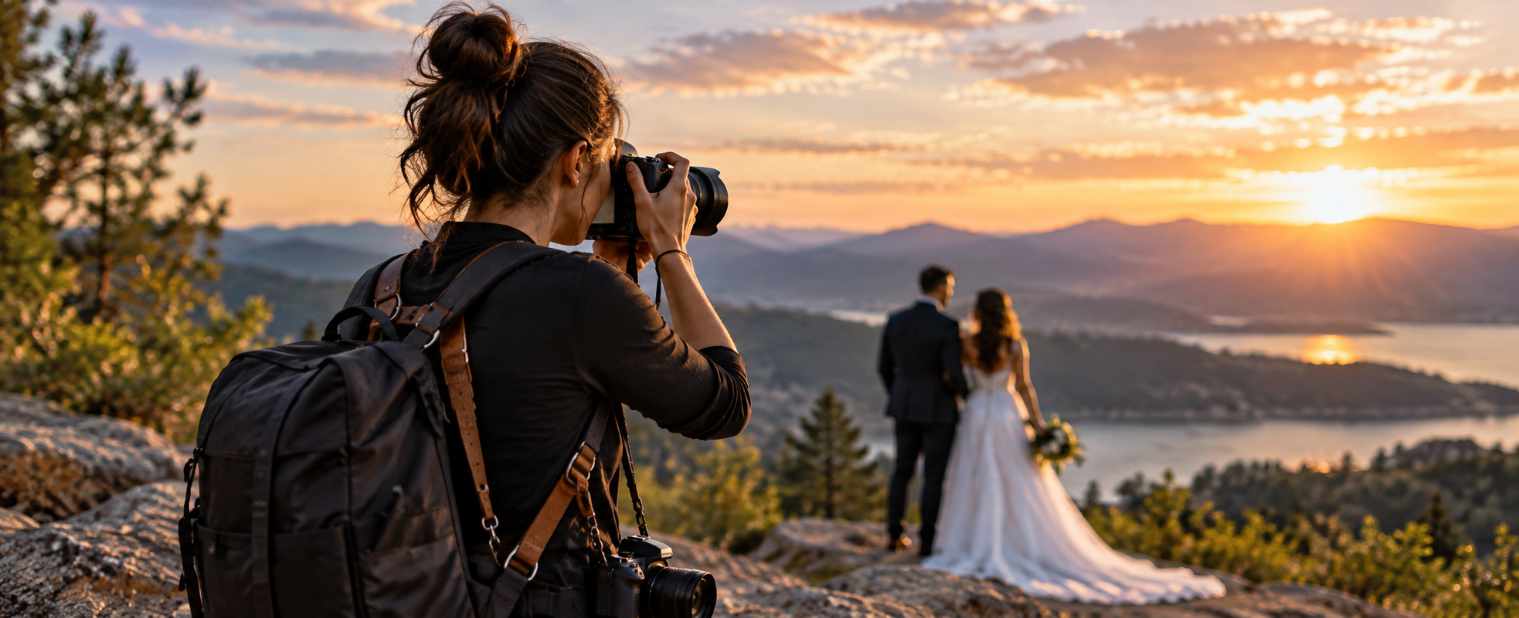
You’re photographing a wedding. You bring your camera bodies, lenses, flashes, stands, and laptop. Maybe you also bring a second photographer to help cover the event.
During the reception, a guest trips near one of your stands. Later, you realize one of your lenses is missing. Then a client raises a concern about part of the photography service.
You may be a one-person business, but those are still different types of business risk. Liability, your equipment, and your professional services may each require different insurance protection.
Start With the Essentials
Four Types of Coverage a Photographer May Want to Review
Not every photographer needs the same insurance. These are some of the primary coverage options an independent photographer may want to discuss.
People & Property
General Liability
May help protect your photography business against certain third-party claims involving bodily injury, property damage, and other covered liability exposures.
Your Gear
Camera & Equipment Coverage
Business property or inland marine coverage may help protect qualifying cameras, lenses, lighting, computers, and other equipment against covered losses.
Your Work
Professional Liability / E&O
May provide protection for certain allegations involving errors, omissions, or financial harm connected to your professional photography services.
Putting It Together
Business Owner’s Policy (BOP)
For qualifying photographers, a BOP may combine certain business property and general liability protection into one policy, with additional coverage options potentially available.
Liability Away From the Camera
What If Someone Gets Hurt During Your Photo Shoot?
Imagine you’re photographing an event and someone trips over a light stand, cable, tripod, or another piece of your setup. Or you’re working inside a client’s home or business and accidentally damage their property.
General liability insurance is designed to address certain claims involving third-party bodily injury and property damage, subject to the policy’s terms, conditions, and exclusions.
Liability insurance may also be important because venues, property owners, or commercial clients sometimes require photographers to show proof of insurance before working at their location.
Protect the Gear
How Much Would It Cost to Replace Everything in Your Camera Bag?
A camera body by itself can be expensive. Add several lenses, flashes, lighting equipment, tripods, computers, storage equipment, and other accessories, and your investment can grow quickly.
Camera Bodies
Lenses
Flashes
Lighting
Tripods & Stands
Laptop
Video Equipment
Storage Equipment
Because your equipment may regularly leave your home or studio, it is important to understand not only whether your equipment is insured, but where the coverage applies and which types of losses are covered.
Important
Don’t Assume Your Homeowners or Renters Policy Fully Protects Your Photography Business
Personal insurance policies may contain limitations or exclusions involving business property and business activities. If you keep professional cameras and equipment at home, review how property used for your photography business is actually insured rather than assuming your personal policy provides the protection you need.
When the Claim Is About Your Work
What If Nothing Was Broken and Nobody Was Injured?
Not every claim involves an accident. Sometimes the disagreement is about the photography service itself.
A client could allege that important photographs were missed, files were lost, images were damaged, a deadline wasn’t met, or the services provided did not satisfy an agreement.
Professional liability, also called Errors & Omissions or E&O insurance, may provide protection for certain claims arising from your professional services, subject to the terms and conditions of the policy.
Wedding & Event Photography
Some Moments Can’t Simply Be Rescheduled
A wedding photographer may work independently almost every day, but a wedding can create several exposures at once. You’re bringing valuable equipment to another location, working around a large number of people, and documenting an event that may only happen once.
The venue may also have its own insurance requirements before you’re allowed to work there.
A venue may ask you for:
A Certificate of Insurance (COI), specific liability limits, or additional insured status depending on the venue, event, contract, and insurance policy.
Different Shoots. Different Risks.
What Type of Photography Do You Specialize In?
You may work across several types of photography or focus mainly on one specialty. Either way, the kind of work you accept can affect the risks you face and the coverage you may want to review.
Wedding & Events
Venues, crowds, valuable equipment, contracts, and events that cannot easily be recreated.
Family & Portraits
Working with clients at home, outdoors, in studios, or at other locations while transporting equipment.
Real Estate
Frequent travel, entering other people’s properties, camera equipment, and potentially drone-related operations.
Business & Branding
Photographing professionals, offices, events, marketing campaigns, and other commercial clients.
Product Photography
Client property, professional service expectations, lighting equipment, studio setups, and commercial agreements.
Sports & Action
Travel, crowded environments, mobile equipment, and potentially high-value cameras and specialty lenses.
Home-Based Photography
Your Home May Be Your Office, but Your Business Goes Everywhere
A lot of independent photographers don’t need a commercial studio. You may answer emails from home, edit photographs at your desk, store your cameras and lenses there, and then travel to wherever your client needs you.
That still creates business exposures. Your equipment, liability, professional services, digital files, and business use of a vehicle may all need to be reviewed separately from your personal insurance.
When Someone Helps You
What If You Occasionally Bring a Second Photographer or Assistant?
You may normally work alone but occasionally bring someone to help with a wedding, event, lighting setup, equipment, or a larger photo shoot.
How that person works with your business can matter. Depending on the arrangement and applicable state rules, there may be questions involving worker classification, workers’ compensation, liability, or whether the person carries their own insurance.
If you regularly or occasionally pay someone to help you on shoots, mention that arrangement when reviewing your business insurance.
Depending on How You Work
Other Coverage May Become Important Too
Your core insurance needs may be fairly straightforward, but other coverage can become relevant depending on how you operate.
Commercial Auto
If a vehicle is owned by the business or used in a way that creates commercial auto exposures, separate coverage may need to be reviewed.
Cyber Insurance
Online galleries, customer information, contracts, payment information, cloud storage, and other digital systems can create cyber exposures.
Workers’ Compensation
If you have an employee or someone working for you who is treated as an employee under applicable law, workers’ compensation requirements may apply.
Umbrella / Excess Liability
Additional liability limits may be available over qualifying underlying policies when higher limits are needed.
Think About Your Business
Before Choosing Insurance, Ask Yourself These Questions
- How much would it cost to replace all of my cameras, lenses, and equipment?
- How often do I take my equipment away from home?
- Do I photograph weddings, events, or large groups of people?
- Do I regularly work inside a client’s home or business?
- Do venues ask me for a Certificate of Insurance?
- What would happen if a client alleged that I missed an important part of a shoot?
- Do I occasionally pay another photographer or assistant to help me?
- Do I use my vehicle regularly for photography jobs?
- Where are my client’s photographs and information stored?
- Do any of my contracts require specific insurance coverage or limits?
Frequently Asked Questions
Questions Independent Photographers Ask About Insurance
Do I need business insurance if I’m the only photographer?
Working alone does not eliminate business risk. You may still own valuable equipment, work around customers, enter other people’s property, sign contracts, provide professional services, and travel to different locations. Your insurance needs should be based on those exposures rather than the size of the business.
Can a wedding venue require me to have insurance?
Yes. Venues and clients may require vendors to carry certain liability limits, provide a Certificate of Insurance, or add another party as an additional insured when appropriate.
Does general liability cover my camera if it is stolen?
General liability is primarily designed to address certain liability claims made against your business. Business property or inland marine coverage may be needed to protect qualifying cameras, lenses, lighting, and other equipment against covered losses.
Does my homeowners or renters insurance cover my professional camera equipment?
Coverage varies by policy. Personal insurance may contain limitations or exclusions involving business property or business activities. If your equipment is used professionally, review how it is actually insured.
What if I only bring another photographer with me occasionally?
Tell your insurance professional how the arrangement works. Whether someone is an employee, independent contractor, subcontractor, or otherwise working with your business can affect insurance considerations and legal obligations.
Can Best Formula Insurance help insure an independent photographer?
Depending on your business, state, eligibility, and available insurance markets, Best Formula Insurance can help review coverage options for independent photographers and explore qualifying insurance programs from multiple insurance companies and specialty markets.
Insurance for Independent Photographers
You Focus on the Shot. We’ll Help You Protect the Business Behind It.
Tell us what you photograph, where you work, what equipment you use, and how your business operates. Best Formula Insurance can help you review coverage options that may fit the way you actually work.
Bilingual Staff English & Spanish
About Best Formula Insurance
Insurance Guidance for the Real World
Best Formula Insurance is an independent insurance agency helping individuals, families, business owners, contractors, and transportation professionals review insurance options from multiple insurance companies. Our goal is to understand what you are trying to protect, explain available coverage options, and help you find an insurance solution that makes sense for your situation.
Personal Insurance
Protect Your Home, Vehicles & Personal Assets
We can help with auto, homeowners, renters, condo, landlord, motorcycle, RV, earthquake, umbrella, and other qualifying personal insurance needs.
Business Insurance
Protect the Business You’ve Worked to Build
Coverage options may include general liability, business owners policies, commercial property, workers’ compensation, professional liability, cyber insurance, commercial auto, and umbrella coverage.
Contractor Insurance
Coverage Built Around the Work You Perform
We can help contractors review general liability, workers’ compensation, commercial auto, tools and equipment, builder’s risk, professional liability, excess liability, and bonds.
Transportation & Commercial Auto
Insurance for Businesses That Depend on the Road
Our transportation options may include commercial auto, trucking, tow trucks, intermodal operations, dump trucks, livery, cargo, physical damage, and other qualifying commercial vehicle risks.
How We Help
One Agency. Multiple Insurance Needs.
Instead of trying to fit every customer into the same policy, our team can review your needs, explain available coverage options, compare qualifying insurance programs, and help you understand the protection you are purchasing.