September 29, 2026
Best Formula KnowledgeYou may own a regular personal vehicle, but what happens when you also use that same car for work? Driving to customers, carrying tools or equipment, visiting job sites, making deliveries, or traveling between appointments can change how an insurance company looks at the vehicle.
Best Formula Insurance
Personal vs. Business Auto
Insurance Education
For many people, there isn’t a clean line between a personal vehicle and a work vehicle.
Maybe you’re a photographer driving to a wedding. A cleaner traveling between customers’ homes. A contractor carrying tools to a job site. A mobile notary driving to appointments. Or a small-business owner using the same vehicle for work during the day and personal errands at night.
The vehicle may still be titled in your name and parked at your house, but the way you actually use it can matter when it comes to insurance.
The Short Answer
Using Your Personal Car for Work Does Not Automatically Mean You Are Covered the Same Way
Some personal auto policies allow certain types of business use, while other types of work-related driving may be restricted, excluded, or require different insurance. Whether you need personal auto, a business-use classification, commercial auto, or another solution depends on how the vehicle is actually being used and the rules of the insurance company.
How You Actually Use the Vehicle
The Question Isn’t Just “Is This My Personal Car?”
A vehicle can belong to you personally and still be used for business activities.
Insurance companies often look at more than whose name is on the registration. They may also consider how often you drive for work, what you carry, where you travel, whether customers are transported, whether the vehicle is used for deliveries, and whether the vehicle supports a business operation.
That is why simply saying “it’s my personal car” does not necessarily answer the insurance question.
The Bigger Question
It’s Not Just Who Owns the Car. It’s How You’re Using It.
Driving to a regular place of employment may be treated differently from driving between customers, carrying equipment to job sites, making business deliveries, transporting passengers for compensation, or operating a vehicle primarily for business.
Personal Use vs. Business Use
Not All Work-Related Driving Is Treated the Same
There can be a big difference between driving your vehicle to your regular workplace and using your vehicle as part of the work you perform.
Typical Personal Use
Everyday Personal Driving
Examples may include driving to the grocery store, visiting family, going to appointments, recreational travel, and other normal personal activities.
Commuting
Driving to Your Regular Workplace
Driving from home to a regular place of employment is typically different from using the vehicle throughout the workday to perform business activities.
Business Use
Using the Vehicle as Part of Your Work
Examples can include traveling between customers, visiting multiple job sites, carrying business equipment, making deliveries, or regularly using the vehicle to perform business activities.
Picture This
Your Personal Car Becomes Part of Your Photography Business for the Day
You’re an independent photographer. The vehicle is registered in your name, and you use it for normal personal activities throughout the week.
On Saturday, you load two cameras, several lenses, lighting equipment, and a laptop into the vehicle and drive 45 miles to photograph a wedding.
Now imagine you’re involved in an accident while traveling to the event.
The important question isn’t only whether the vehicle belongs to you personally. Your insurance company may also look at how the vehicle was being used when the accident occurred and whether that use fits the policy.
Common Examples
You May Be Using Your Personal Car for Business More Than You Realize
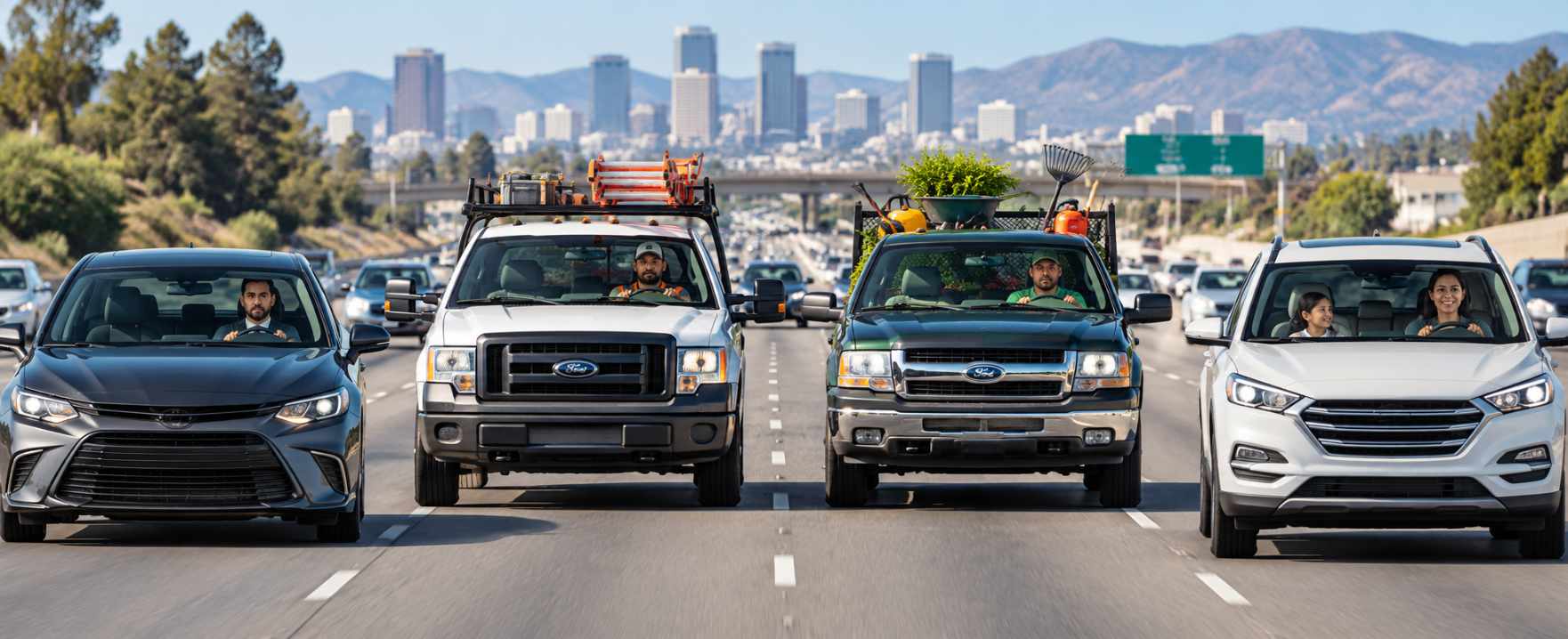
Business use does not always involve a company van or truck with a logo on the side. Many small-business owners use their regular personal vehicle while performing their work.
Photographers
Driving to weddings, events, homes, businesses, and photo locations while carrying cameras and equipment.
Cleaning Businesses
Traveling between multiple homes or offices while carrying cleaning supplies and equipment.
Contractors
Driving to job sites while carrying tools, materials, ladders, or other equipment used for work.
Mobile Notaries
Traveling to homes, offices, hospitals, escrow offices, and other customer locations for appointments.
Real Estate Professionals
Driving between listings, open houses, inspections, offices, and client meetings.
Small Business Owners
Running business errands, visiting customers, delivering products, transporting supplies, and handling day-to-day business activities.
Important
Don’t Wait Until an Accident to Explain How You Use Your Vehicle
Your insurance application and policy should accurately reflect how the vehicle is being used. If your driving habits change because you start a business, take on additional work, begin making deliveries, visit customers regularly, or use the vehicle differently than before, discuss the change with your insurance professional.
What’s Inside the Vehicle?
Does Auto Insurance Cover the Business Equipment in Your Car?
This is another area where people can make assumptions.
Auto insurance is primarily designed around the vehicle and auto-related liability. That does not necessarily mean expensive tools, cameras, laptops, inventory, cleaning equipment, or other business property inside the vehicle are automatically covered by the auto policy.
Business Property You May Carry
Cameras, lenses, laptops, construction tools, cleaning equipment, mobile office equipment, inventory, samples, electronics, supplies, and other property used in your business may require separate business property or inland marine coverage depending on the exposure.
Another Common Misunderstanding
A Broken Window and Stolen Equipment Can Be Two Different Insurance Questions
Imagine someone breaks into your vehicle and steals business equipment.
Damage to the vehicle and loss of the property inside the vehicle may involve different types of coverage. Do not assume that because the vehicle itself is insured, everything stored inside it is automatically insured too.
When Personal Auto May Not Be Enough
When Should You Consider Commercial Auto Insurance?
There isn’t one rule that applies to every driver. Insurance companies have different underwriting guidelines, policy forms, and eligibility requirements.
Commercial auto may become more relevant when a vehicle is owned by a business or regularly used as part of business operations.
Situations worth discussing may include:
- The vehicle is titled or registered to a business
- You drive to multiple customers or job sites regularly
- You transport tools, equipment, inventory, or materials
- You make deliveries as part of the business
- Employees or other people drive the vehicle for work
- The vehicle has specialized equipment installed
- You need higher liability limits for contracts or business requirements
- The vehicle plays an important role in generating business income
For Self-Employed Drivers
What If You’re Self-Employed and It’s Your Only Car?
This is common. You may have one vehicle that you use for both your personal life and your business.
That doesn’t automatically mean you need two separate vehicles, and it doesn’t automatically mean that every personal policy will handle the exposure the same way.
Explain exactly how you use the vehicle. The insurance company can then determine whether the use fits a personal policy, requires a business-use classification, or belongs on a commercial auto policy.
When Someone Else Drives
What If an Employee or Helper Uses Their Own Car for Your Business?
Small businesses sometimes have employees or helpers use their personal vehicles to run errands, visit customers, make deliveries, or travel between job sites.
That can create a different exposure because the business may have liability connected to vehicles it does not own.
Businesses that rely on employees or other workers driving personal vehicles for work should discuss hired and non-owned auto liability and other appropriate coverage options with an insurance professional.
Review Your Own Driving
Questions to Ask Yourself About Your Vehicle
- Do I drive directly from home to one regular workplace?
- Do I travel between customers, appointments, or job sites?
- Do I carry tools, equipment, products, or supplies?
- Do I make deliveries?
- Is the vehicle titled personally or to my business?
- Does anyone else drive the vehicle for my business?
- Do employees use their own vehicles for my business?
- Does my insurance company know I use the vehicle for work?
- Does my business require higher liability limits?
- Would the loss of the vehicle prevent me from doing my job?
Frequently Asked Questions
Questions About Using a Personal Vehicle for Work
Does driving to work count as business use?
Driving from home to a regular place of employment is generally treated differently from using your vehicle throughout the workday to visit customers, job sites, appointments, or other business locations. Policy definitions and underwriting rules vary by insurance company.
Can I use my personal car to visit customers?
Possibly, but whether that use is acceptable under a personal auto policy depends on the insurance company, frequency of use, type of work, and other underwriting factors. Tell your insurance professional how you use the vehicle.
Do I automatically need commercial auto because I’m self-employed?
Not necessarily. The correct policy depends on how the vehicle is owned and used, what kind of business activity is involved, and the insurance company’s eligibility rules.
Does auto insurance cover tools or equipment inside my car?
Do not assume it does. Business tools, cameras, computers, equipment, inventory, and other property may require separate business property or inland marine coverage. Coverage depends on the applicable policies and circumstances of the loss.
What if I only use my car for work occasionally?
Occasional business use can still be relevant. The type and frequency of the activity matter. Explain how often you use the vehicle for work and what you do with it so your insurance options can be reviewed accurately.
What if an employee uses their own car for my business?
Businesses can have liability exposures when employees or workers use vehicles the business does not own. Hired and non-owned auto liability may be worth reviewing depending on the operation.
Can Best Formula Insurance help me figure out whether I need personal or commercial auto?
Yes. Explain who owns the vehicle, how you use it, what kind of work you perform, how often you drive for business, and whether anyone else drives. Depending on your state, eligibility, and available insurance markets, Best Formula Insurance can help review personal and commercial auto options.
Personal or Commercial Auto?
Tell Us How You Actually Use Your Vehicle
Whether you drive to customers, carry tools, visit job sites, make deliveries, or simply use your personal vehicle occasionally for work, Best Formula Insurance can help you review insurance options based on the way you actually drive.
Bilingual Staff English & Spanish
About Best Formula Insurance
Insurance Guidance for the Real World
Best Formula Insurance is an independent insurance agency helping individuals, families, business owners, contractors, and transportation professionals review insurance options from multiple insurance companies. Our goal is to understand what you are trying to protect, explain available coverage options, and help you find an insurance solution that makes sense for your situation.
Personal Insurance
Protect Your Home, Vehicles & Personal Assets
We can help with auto, homeowners, renters, condo, landlord, motorcycle, RV, earthquake, umbrella, and other qualifying personal insurance needs.
Business Insurance
Protect the Business You’ve Worked to Build
Coverage options may include general liability, business owners policies, commercial property, workers’ compensation, professional liability, cyber insurance, commercial auto, and umbrella coverage.
Contractor Insurance
Coverage Built Around the Work You Perform
We can help contractors review general liability, workers’ compensation, commercial auto, tools and equipment, builder’s risk, professional liability, excess liability, and bonds.
Transportation & Commercial Auto
Insurance for Businesses That Depend on the Road
Our transportation options may include commercial auto, trucking, tow trucks, intermodal operations, dump trucks, livery, cargo, physical damage, and other qualifying commercial vehicle risks.
How We Help
One Agency. Multiple Insurance Needs.
Instead of trying to fit every customer into the same policy, our team can review your needs, explain available coverage options, compare qualifying insurance programs, and help you understand the protection you are purchasing.